

Mubarat (Divorce by Mutual Consent) in Pakistan: Deed, Notice and NADRA Certificate
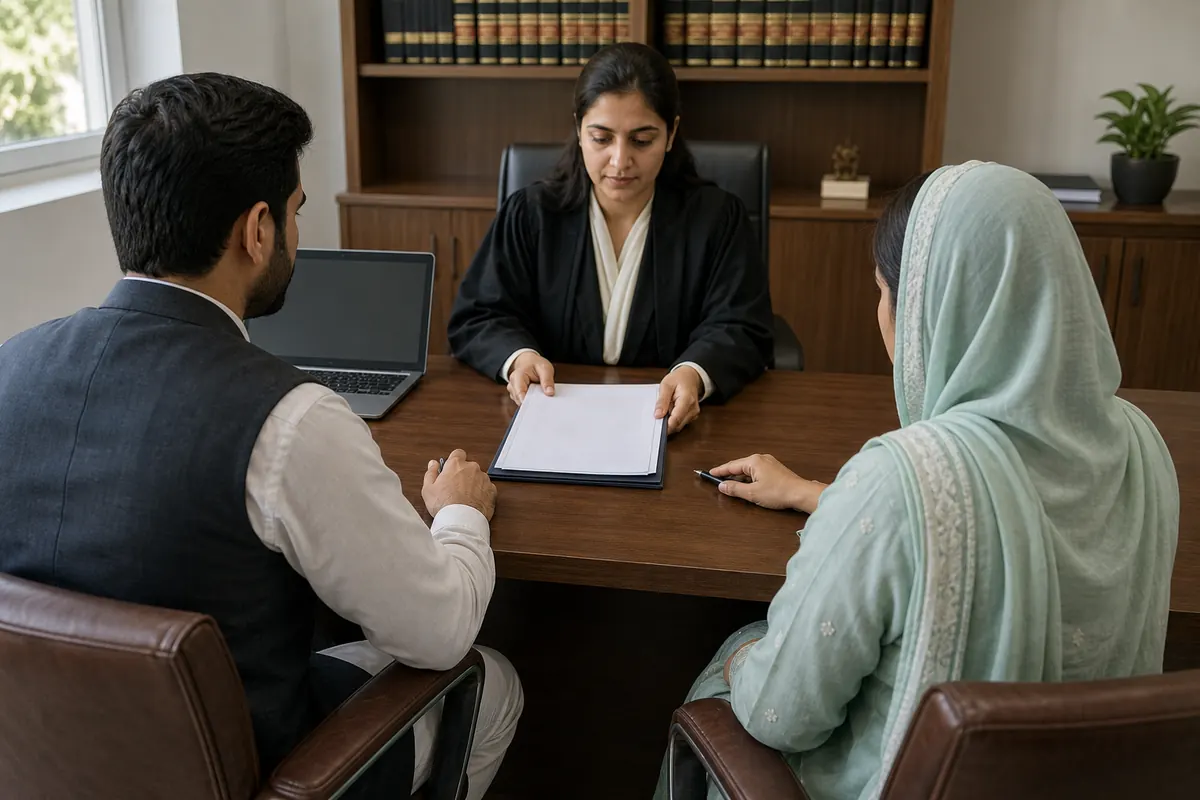
Mubarat (Divorce by Mutual Consent) in Pakistan is the route a Muslim husband and wife take when both of them want to end the marriage and are willing to agree the terms between themselves. Our advocate-led family law team, in practice since 1985 with offices in Karachi, Islamabad, Rawalpindi and Lahore, drafts the Mubarat deed, negotiates dower, dowry, maintenance and custody terms, serves the statutory notice on the Union Council and follows the matter through to the NADRA divorce certificate. For a confidential first discussion, Call/WhatsApp +92 333 1127835 and speak to Sobia Mohsin, our family law expert.
This guide explains what Mubarat means, how it differs from Talaq and Khula, what a sound Mubarat deed should contain, and how the Muslim Family Laws Ordinance 1961 governs the notice, the Arbitration Council and the 90-day period before the divorce takes effect.

What Is Mubarat (Divorce by Mutual Consent) in Pakistan?
In Muslim personal law, Mubarat (also written mubarra’at) is a dissolution of marriage in which the desire to separate comes from both spouses. Neither side is forced; both accept that the marriage should end and both agree the consequences. The word itself carries the sense of mutually releasing each other from the marital bond and its claims.
Because the consent is mutual, Mubarat in Pakistan is usually quicker and less adversarial than a contested Khula suit. It does not require either spouse to prove fault, and it does not require a court decree. What it does require is a clear written record of the agreement and compliance with the notice procedure under the Muslim Family Laws Ordinance 1961 (MFLO).
Mubarat, Talaq and Khula: How Divorce by Mutual Consent in Pakistan Differs
Families often use these terms loosely when discussing Mubarat in Pakistan, but the legal routes are different, and choosing the wrong one can delay the divorce or affect financial rights.
Talaq
Talaq is a divorce pronounced by the husband. It is a unilateral act; the wife’s consent is not needed. The husband must give written notice to the Chairman of the Union Council and a copy to the wife under section 7 of the MFLO.
Khula
Khula is a dissolution sought by the wife. Where the husband does not agree, the wife files a suit for dissolution of marriage on the basis of Khula in the Family Court under the Family Courts Act 1964, and the court decides the matter, including what (if anything) the wife must return. Grounds-based dissolution under the Dissolution of Muslim Marriages Act 1939 is a separate, fault-based route.
Mubarat
Mubarat sits between the two: both spouses want the divorce and record it by agreement, without litigation. Under section 8 of the MFLO, where the parties wish to dissolve the marriage otherwise than by Talaq, the procedure in section 7 applies “mutatis mutandis and so far as applicable”. In practice, Mubarat (Divorce by Mutual Consent) in Pakistan therefore follows the same notice, Arbitration Council and 90-day period as Talaq.
Drafting the Mubarat Deed for Divorce by Mutual Consent in Pakistan
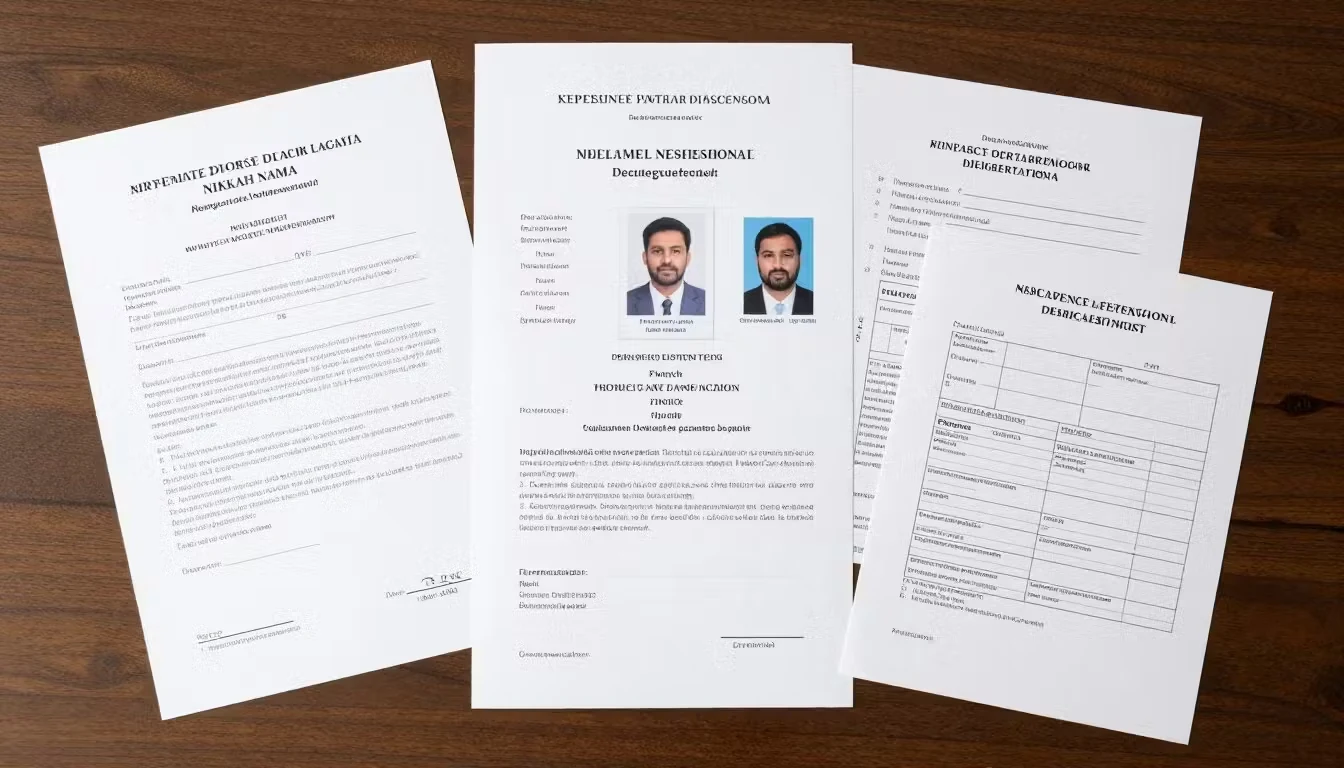
The Mubarat deed is the central document in a divorce by mutual consent in Pakistan. It should be drafted carefully, signed by both spouses before witnesses, and ideally executed on stamp paper and attested. A well-drafted deed usually records:
- Full names, CNIC numbers and addresses of both spouses, and the date and place of the Nikah with Nikah Nama registration details.
- A clear statement that both spouses, of their own free will, agree to dissolve the marriage by Mubarat.
- The position on dower (Haq Mehr): paid, outstanding, partly waived, or to be paid on a stated date.
- Return of dowry articles and the wife’s personal belongings, preferably with an itemised list.
- Maintenance for the wife during the iddat period and maintenance for any children.
- Arrangements for custody of and contact with minor children.
- An undertaking to send notice to the Union Council and to co-operate until the divorce certificate is issued.
For divorce by mutual consent in Pakistan, a vague deed that simply says “all claims settled” invites later disputes. Each financial and child-related term should be specific, dated and capable of being proved.
Settling Dower, Dowry, Maintenance and Custody
Dower (Haq Mehr)
Dower is the wife’s right and remains payable unless she freely gives it up. In Mubarat in Pakistan, spouses commonly agree that the wife will forgo some or all of the unpaid dower, or that the husband will pay it in full. Any waiver should be voluntary, written and precise. Under section 10 of the MFLO, where the Nikah Nama does not specify the mode of payment, the entire dower is presumed payable on demand.
Dowry and Personal Belongings
Dowry articles and gifts given to the wife are her property. An itemised list with the agreed date of return avoids later claims in the Family Court, which has jurisdiction over dowry and personal property under the Schedule to the Family Courts Act 1964.
Maintenance
The deed should state maintenance for the iddat period and continuing maintenance for children. A father’s obligation to maintain his children is not something the spouses can extinguish by agreement between themselves.
Child Custody and Visitation
In Mubarat in Pakistan, parents may agree residence and visitation, but the welfare of the minor is the paramount consideration under the Guardians and Wards Act 1890. A court can revisit custody terms later if the child’s welfare requires it.
Union Council Notice for Mubarat in Pakistan and the Arbitration Council
Signing the deed alone does not complete a Mubarat divorce in Pakistan. Section 8 of the MFLO applies the section 7 procedure, so written notice of the dissolution must be delivered to the Chairman of the Union Council concerned, with a copy to the other spouse.
Which Union Council?
The rules made under the Ordinance link jurisdiction primarily to where the wife resides, with alternatives where she lives outside Pakistan. We confirm the correct Union Council before notice is sent, because notice to the wrong office is a common cause of delay.
Role of the Arbitration Council
Within thirty days of receiving the notice, the Chairman must constitute an Arbitration Council to take steps towards reconciliation. In a genuine Mubarat both parties have already decided to separate, but attendance and co-operation with the Council keep the record clean.
The 90-Day Period for Mubarat in Pakistan
Under section 7(3), applied through section 8, the dissolution does not take effect until ninety days have passed from the day the notice is delivered to the Chairman. If the wife is pregnant, it takes effect only when the ninety days or the pregnancy, whichever is later, ends. During this period the matter may still be revoked if both spouses reconcile, so neither party should remarry before the period has run and the divorce has been confirmed.
NADRA Divorce Certificate After Mubarat (Divorce by Mutual Consent) in Pakistan
Once the ninety days have passed, the Union Council issues a certificate confirming that the divorce has become effective, and the divorce is registered on the NADRA system so that a computerised NADRA divorce certificate can be issued. This certificate is needed to update CNIC marital status, for passports and visas, and for any future Nikah. Whichever city you are in, the certificate is the final proof that Mubarat in Pakistan has been completed. Keep certified copies of the deed, the notice and the Union Council record.
How Our Family Lawyers Help
- Advise whether Mubarat, Talaq or Khula is the right route for your circumstances.
- Draft a clear Mubarat deed covering dower, dowry, maintenance and custody.
- Negotiate terms with the other spouse or their counsel.
- Identify the correct Union Council and serve the statutory notice.
- Attend the Arbitration Council and follow up through the 90-day period.
- Obtain the Union Council certificate and NADRA divorce certificate.
Mubarat (Divorce by Mutual Consent) in Pakistan: FAQs
Is Mubarat legally recognised in Pakistan?
Yes. Mubarat is a recognised form of dissolution in Muslim law, and section 8 of the Muslim Family Laws Ordinance 1961 applies the section 7 notice procedure to dissolution otherwise than by Talaq.
Does Mubarat require going to the Family Court?
Not ordinarily. In divorce by mutual consent in Pakistan both spouses agree, so no court decree is needed. The Family Court becomes relevant only if a dispute later arises over dower, dowry, maintenance or custody.
How long does a divorce by mutual consent take?
The dissolution takes effect ninety days after notice is delivered to the Union Council Chairman, or at the end of pregnancy if later. Issuing the certificates takes additional administrative time.
Can the wife keep her Haq Mehr in Mubarat?
Yes, if that is what the spouses agree. Dower is the wife’s right; any waiver must be voluntary and clearly recorded in the deed.
Can Mubarat be done if one spouse is abroad?
Yes. The overseas spouse can sign the deed before a Pakistani mission or appoint an attorney through a duly attested power of attorney.
Can we reconcile after signing the Mubarat deed?
Reconciliation is possible before the ninety-day period ends. Tell the Union Council and your lawyer promptly so the record reflects the revocation.
Who decides child custody in Mubarat?
The parents agree arrangements in the deed, but the child’s welfare remains paramount and a Guardian Court may vary terms under the Guardians and Wards Act 1890.
Related Guides
- Compare the wife-initiated route in our guide to Khula in Pakistan.
- Read the full divorce procedure in Pakistan, including Talaq notices.
- See how to obtain a NADRA divorce certificate in Pakistan.
- Living overseas? Use a power of attorney for divorce in Pakistan.
Sources
- Muslim Family Laws Ordinance 1961, sections 7, 8 and 10 — Pakistan Code
- Family Courts Act 1964 (Schedule); Guardians and Wards Act 1890; Dissolution of Muslim Marriages Act 1939 — Pakistan Code
- Divorce registration and certificates — NADRA
This guide is general information, not legal advice for your particular case.
Reviewed by Sobia Mohsin, Family Law Expert · Published by Divorce & Family Lawyers, a Qanoon Group member firm · Last updated 1 November 2026