


Follow-Up After a Family Court Khula Decree
A khula decree should be followed by careful document collection and completion of the applicable transmission and local registration steps. The court record, the relevant local authority’s record and any subsequent computerised certificate must be consistent. Obtaining a judgment copy alone should not be treated as proof that every administrative step has been completed.
The procedure depends on the jurisdiction, applicable legislation and the decree itself. Confirm the operative orders, any stay and the legally relevant dates before relying on the divorce for remarriage or overseas documentation. A standard timeline quoted without examining the file may overlook a missing transmission, receipt or other material issue.
Obtain Certified Judgment and Decree Copies
Apply through the court’s copying process for the certified judgment and decree. Check the parties’ names, case number, court, marriage details and date against the case record. Read the operative directions rather than relying on an informal summary of the hearing.
Keep copies of orders concerning dower, maintenance, custody, costs or other relief. Dissolution of marriage does not mean that every separate financial or child-related issue has been resolved. Identify what the court decided and what remains pending.
If the decree contains an apparent clerical error, ask counsel about the appropriate correction application. Do not alter a scanned copy or ask a local office to substitute its own wording for the court’s order. Retain the corrected certified copy and any correction order together.
Confirm Transmission to the Relevant Authority
Ask the court office for the transmission or dispatch particulars required under the applicable law. The relevant Family Courts legislation contains provisions concerning communication of dissolution decrees to the appropriate local authority, with jurisdiction-specific amendments. Confirm the current provision for the court concerned rather than applying one province’s period nationwide.
Record the dispatch date, reference, recipient office and available delivery evidence. Then confirm receipt at the receiving office and obtain an acknowledgement or file reference. A court dispatch entry and actual receipt are different facts; retaining evidence of both makes follow-up more reliable.
If the copy was sent to the wrong office or cannot be traced, obtain written information and seek the appropriate corrective direction. Do not resolve a jurisdiction problem by informally creating a second record elsewhere. The correct authority should be identified from the governing rules and the parties’ circumstances.
Complete Local Registration and Certificate Follow-Up
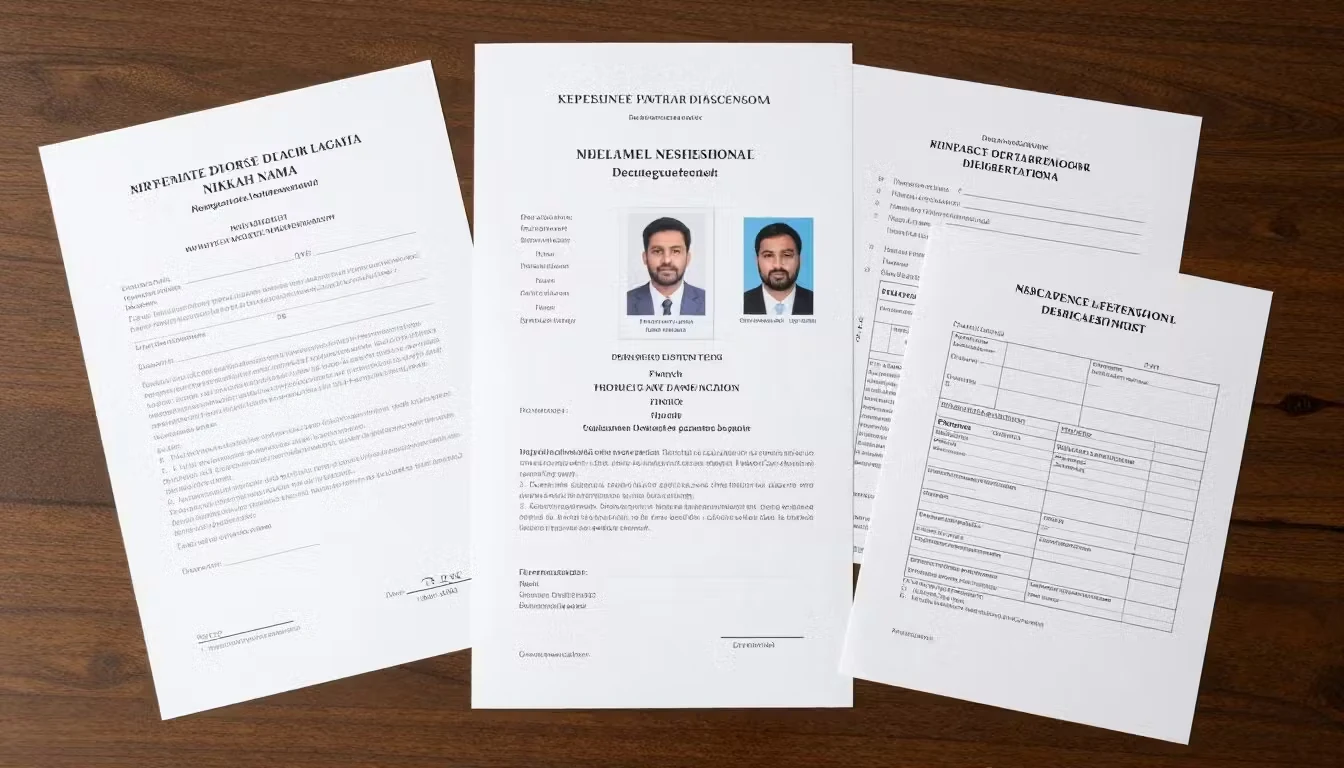
Submit the supporting documents requested by the competent office and retain a dated acknowledgement. The file may require identity documents, marriage particulars and the certified court record. Follow lawful notices and requests for clarification and keep copies of responses.
Sections 7 and 8 of the Muslim Family Laws Ordinance are relevant to the statutory framework for Muslim divorce and dissolution otherwise than by talaq. Their application to the particular decree, relevant dates and any exceptional circumstances should be assessed with the applicable local law. Do not assume that a certificate can always be collected a fixed number of days after the court hearing.
On collection, compare the certificate with the decree, identity records and marriage record. Check spelling, numbers, dates and issuing authority details. Ask the issuing office to explain any discrepancy and follow the formal correction process. A computerised format does not remove the need to verify the underlying particulars.
Overseas Use, Pending Rights and Missing Records
An overseas applicant may need an appropriately authenticated power of attorney for permitted follow-up tasks. Confirm the receiving office’s requirements before arranging execution abroad. Keep the representative’s authority limited to the intended work and request copies of every submission and receipt.
For use outside Pakistan, ask the receiving authority whether it needs the decree, local certificate, authentication and a certified translation. Attestation does not replace completion of the underlying registration process or guarantee foreign recognition.
If an office does not respond, preserve the application, receipt and correspondence and ask counsel to identify the appropriate administrative or judicial remedy. Keep a dated chronology so the source of the delay can be established. Avoid paying for a replacement record without first checking whether the original file can be traced.
Separately monitor outstanding dower, maintenance and child-related proceedings. Keep the divorce document file distinct from execution records, while making relevant orders available to counsel. Administrative completion of the marital-status record does not automatically discharge every other obligation.
Frequently Asked Questions
What Should I Do First After a Khula Decree?
Obtain certified copies of the judgment and decree, check their particulars and ask counsel to confirm the required transmission and registration follow-up.
Is the Court Judgment the Same as a Divorce Certificate?
No. They are distinct records serving different functions. The court’s decision and the subsequent local registration documentation should be kept together where applicable.
How Can I Confirm the Decree Was Sent?
Ask the court office for the dispatch reference, date and recipient. Then obtain confirmation of receipt or a file reference from the receiving authority.
Can I Apply to Any Union Council?
Do not assume that any office has jurisdiction. Identify the competent local authority under the applicable rules and the facts of the marriage and proceedings.
Is the Waiting Period Always Counted From the Hearing?
No single date should be assumed without checking the governing law and record. Transmission, receipt and other relevant circumstances may affect the assessment.
What If the Court Sent the Decree to the Wrong Office?
Obtain the dispatch and receiving-office information and ask counsel to seek the appropriate correction or direction. Avoid creating inconsistent duplicate records.
Can NADRA Replace the Court or Local Authority?
NADRA identity-record processes do not replace the judicial decree or the competent authority’s divorce-registration functions. Confirm the separate requirements for each record.
Can an Overseas Applicant Use a Representative?
Representation may be accepted for permitted tasks with suitable authority. Check the office’s power-of-attorney and identification requirements before sending documents.
What If the Certificate Contains a Spelling Error?
Apply through the issuing authority’s correction process with supporting records. If the error originates in the decree, a court correction may also be required.
Does Khula End Every Financial Claim?
Do not assume that it does. Read the decree and separate orders to identify the treatment of dower, maintenance and other claims.
Can I Use the Certificate Abroad Immediately?
Check the receiving authority’s requirements for finality, supporting court records, authentication and translation. Possessing the certificate alone does not guarantee acceptance.
What Should I Keep in My Final Document File?
Retain certified court records, dispatch and receipt evidence, local registration documents, identity copies, correction orders and any attestation or translation records.
Official Sources and Related Guidance
For related procedure, consult our divorce documents guide, computerised divorce certificate guidance and family law services. Requirements depend on the relevant jurisdiction and the documents in the individual matter.
Discuss Your Documents and Next Steps
For assistance, call +92 331 6644789. Bring the relevant court orders, identity records and correspondence so the required procedure can be assessed.
Johar Chowrangi Office
2nd Floor, Supreme Corner, Johar Chowrangi, Gulistan-e-Johar, Karachi.
DHA Phase 7 Office
76-C, Mezzanine, Main Jami Commercial, Phase 7, DHA, Karachi.